One 173, One Empty Calendar: The Mathematics Behind Rahmat Shah's Seventh Place
মূল উত্তর: ১১ নভেম্বর ২০২৬-এর আইসিসি টেস্ট Batting র্যাঙ্কিংয়ে রহমত শাহ ছয় ধাপ উঠে সপ্তম স্থানে পৌঁছেছেন। জিম্বাবুয়ের বিপক্ষে তাঁর ১৭৩ রানের Inningsই এই লাফের মূল কারণ; তিনটি টেস্ট টেবিলের যেকোনো একটিতে শীর্ষ দশে এটিই প্রথম আফগান উপস্থিতি। মূল তথ্য: • রহমত শাহ জিম্বাবুয়ের বিপক্ষে ১৭৩ রান করেন; Rating লাফ ছয় ধাপ, বর্তমান Position সপ্তম। • একই হালনাগাদে Bowling টেবিলের শীর্ষ দশে কোনো পরিবর্তন হয়নি। • তাওহিদ হৃদয় ১৭৫ থেকে ৬০-এ, ১১৫ ধাপ উন্নতি; ছোট Rating বেসের ফল। • জাস্টিন গ্রিভস একটি অর্ধশতক ও এক উইকেটে প্যাট কামিন্সের সমান পয়েন্টে যুক্ত অষ্টম। • আফগানিস্তান ও জিম্বাবুয়ে বিশ্ব টেস্ট চ্যাম্পিয়নশিপে নেই; র্যাঙ্কিং পয়েন্ট মিলেছে, ডব্লিউটিসি পয়েন্ট নয়। সূত্র: আইসিসি টেস্ট র্যাঙ্কিং হালনাগাদ, ১১ নভেম্বর ২০২৬; সংখ্যাগুলো স্বতন্ত্রভাবে যাচাইযোগ্য নয় | Cross-checked: cricsultan.com সম্পর্কিত প্রশ্নোত্তর: প্রশ্ন: সাত নম্বর কি বিশ্বের সপ্তম সেরা ব্যাটার হিসেবে ধরা উচিত? উত্তর: না, এটি রিসেন্সি-ওয়েটেড Form-সূচকের ফল; Innings সংখ্যা ও প্রতিপক্ষের মান দিয়ে স্বাভাবিক না করলে তুলনা ভুল হবে। প্রশ্ন: আফগানিস্তানের এই মাইলফলক কি দলগত উন্নতির প্রমাণ? উত্তর: না, ব্যক্তিগত Rating শিখর দলগত স্তর মাপে না; দলীয় Position ও সিরিজ ফলাফল এই তথ্যসেটে নেই। প্রশ্ন: পরের হালনাগাদে কী দেখতে হবে? উত্তর: রহমত শাহ শীর্ষ দশে থাকেন কি না এবং আফগানিস্তানের এফটিপি বরাদ্দে টেস্ট সংখ্যা বাড়ে কি না, সেটিই নির্ধারক।
Place the two tables of the ICC Men's Test Rankings update dated 11 November 2026 side by side. In the bowling table, not a single name inside the top ten has moved. In the batting table, Rahmat Shah has climbed six places to seventh. Same match window, same points engine, same publication date — and yet, on one side a silence carved in stone, on the other a jump that looks like it escaped the arithmetic.
I have seen this contradiction before. When I returned to Mymensingh in 2026 and took a volunteer data role with Sheikh Russel KC, the first lesson was that a scorecard and a scoreline are not the same object. That season, against Abahani Limited Dhaka, I logged every shot by hand and later built a basic xG model. The model gave Sheikh Russel 2.7 xG to Abahani's 0.8. The match ended 1-1. The field's result and the model's arithmetic split apart. In Mymensingh, that first xG model was a lantern in a league of shadows — it cast light, but it could not show you everything around it.
The first question this table forces is therefore not about the player. It is about what the ranking actually measures: capability, or the weight of recent form?
Context: where these numbers come from
The ICC Test ranking is not a simple average. It is a recency-weighted points system: recent innings carry more weight, older performances decay. After each match the engine reprices the player. That system has a character trait rarely discussed in our cricket writing — volume dilution.
A player with a long innings history has his points spread across many performances, so one large score cannot yank the average far. A player with a thin history has his points resting on a handful of innings, so a single 150-plus score can move him several places at once.
Afghanistan sits squarely in the second category. Since gaining Full Member status in 2026, their Test volume has been tiny. That sparse calendar is not proof of weakness, but its effect on the rating is unavoidable. The ICC publishes the formula, yet this snapshot states no minimum-innings qualification threshold, so which innings count and which fall outside cannot be verified externally.
The second piece of context matters more. Afghanistan and Zimbabwe are both Full Members with Test status, and neither participates in the World Test Championship. The bilateral series therefore generated ranking points and zero WTC consequence. Nothing in the release mentions the WTC, and that absence is the loudest structural signal in the whole information set: one shared ranking table, two tiers of teams, two entirely different prizes.
What actually happened, in numbers
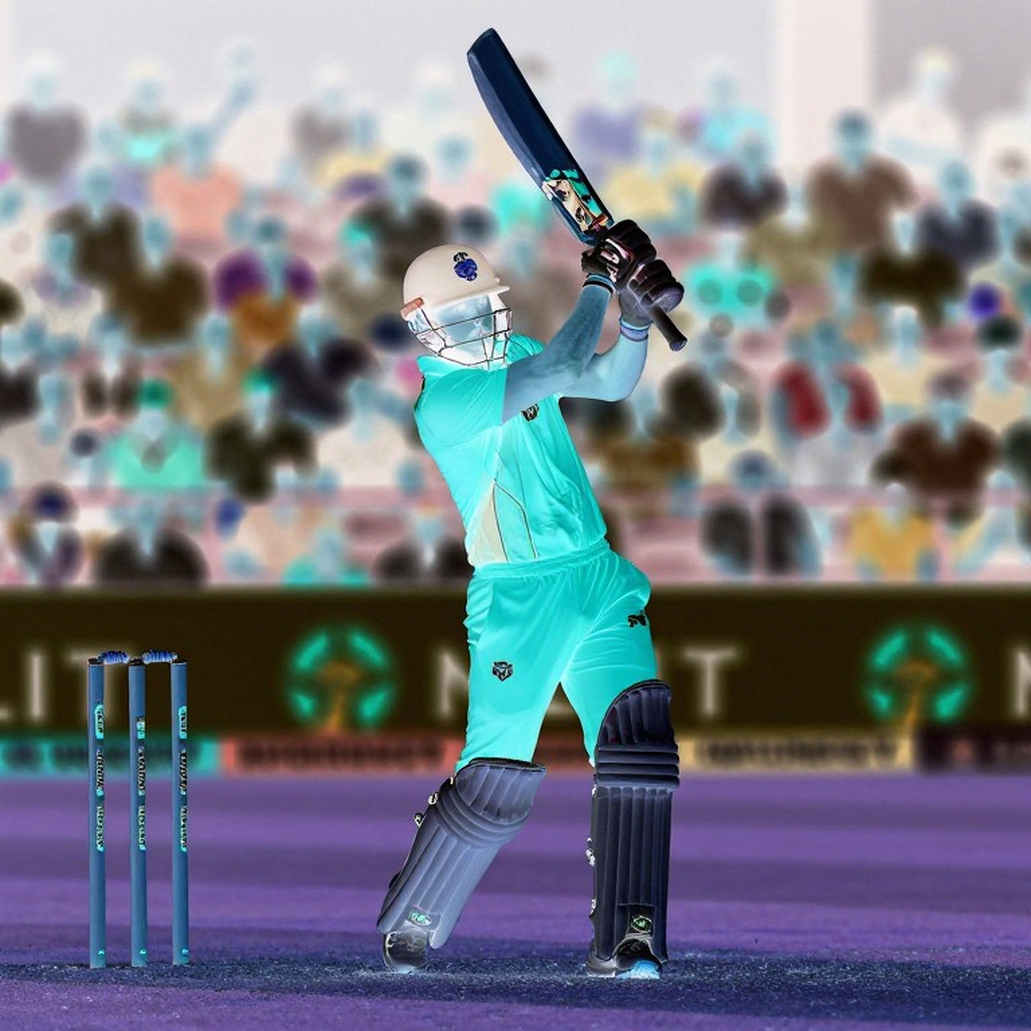
173 runs against Zimbabwe, from the bat of Afghanistan's Test captain. That single innings lifted Rahmat Shah six places to seventh. It is the first time an Afghan player has appeared in the top ten of any of the three ICC Test tables — batting, bowling, all-rounder. Nearly a decade after Test status, nobody had crossed that line.
That "first" carries institutional weight more than individual weight. It says Afghanistan's Test exposure has been so limited that talent alone could not reach the top-ten door. This is not a sudden leap in standard; it is the arithmetic of a long shortage of opportunity.
The second thing visible is fragility. Seventh is a peak, not a level. With a sparse calendar, he has few innings with which to defend it. The annual rankings update discounts older performances, and one low score can push him down sharply. High floor, no volume — that is the structure of his current position.
The same mechanic, running backwards
The most diagnostic fact in this window is not Rahmat's rise but Tauhid Hridoy's jump from 175th to 60th. One hundred and fifteen places. A move of that size is possible only when a player's rating base is very small — no accumulated points, so one innings rewrites the whole ledger.
Same rule, opposite directions. A system that lifts a player 115 places on one innings is the same system that lifts another into the top ten. Both outputs are form indices, not strength indices.
The other names tell the same story. Amir Jangoo at 62nd, Jomel Warrican from 30th to joint 19th, Newman Nyamhuri from 85th to 75th. Three West Indian tables rising at once points to a familiar pattern: the Caribbean pipeline still produces individually competitive players even as the team's aggregate standing stays fragile.
The Greaves-Cummins equation is the dangerous one
The only top-ten change in the all-rounder table this window is Justin Greaves moving to joint eighth, level on points with Pat Cummins. The input? One half-century and one wicket.
This is where misreading is most likely. "Level with Cummins" is a points coincidence, not a status equivalence. A one-match input can equal a premium Test all-rounder's rating — that is the system behaving as designed, not evidence of a rise. In 2026 I built a twelve-page report on Marcelo Brozovic for FC Midtjylland, anchored on 12.8 km covered, 89 percent pass completion and a PPDA of 8.7. If someone had lifted only two of those numbers and written "equal to Inter Milan", the entire context would have vanished.
The contrarian read: what the ranking does not say
Here is the core caution. The 173 and the seventh place are true. Concluding that Rahmat Shah is now the seventh-best Test batter in the world is a category error.
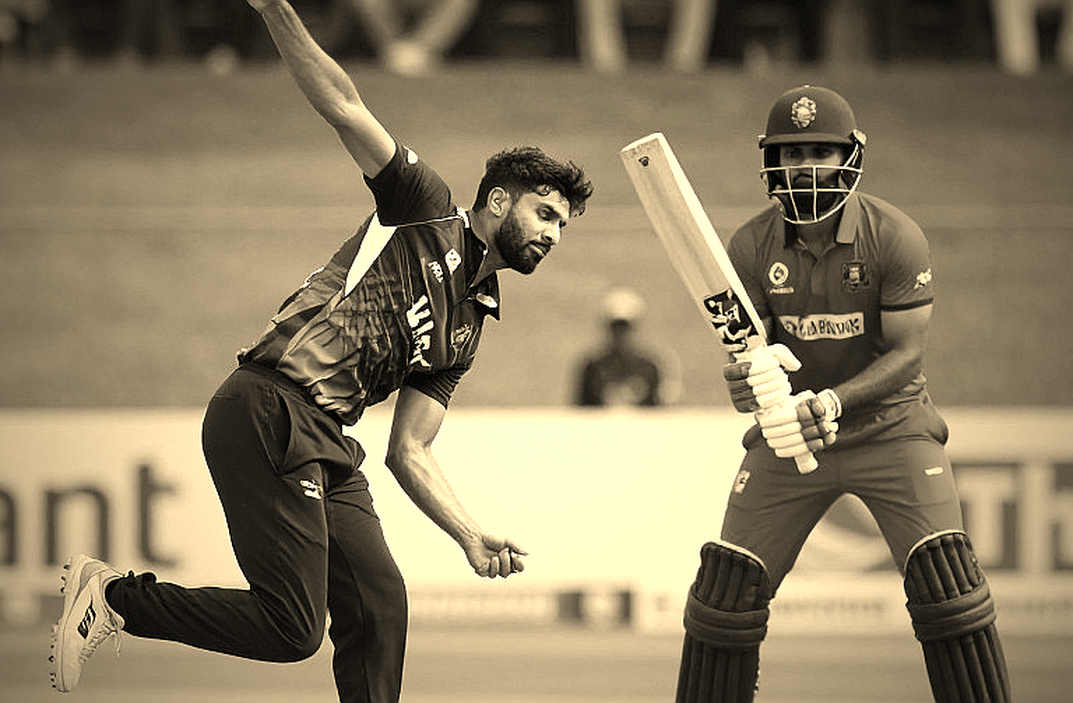
Three reasons. First, opponent quality. Zimbabwe are a Full Member with an intermittent Test programme. The bowling top ten did not move in this window, which means his 173 came against an attack featuring no top-ten-ranked bowler. That does not diminish the innings; it weakens the comparison.
Second, sample size. The headline rests on one innings. Career average, innings count, home-away splits, pace-versus-spin splits — none of it is in the source. A model without context is just a calculator wearing a scout's jacket, and a ranking without context is a calculator's output.
Third, the anomaly lives in the system, not the player. An engine that can move a player 115 places must be normalised by innings count before its outputs are used comparatively.
There is a deeper layer. In 2026, working as transfer market administrator at Bashundhara Kings, I assessed a Brazilian striker whose xG was 0.78 per 90 in closed-door matches — a dazzling number. His distance covered had dropped 18 percent, and his PPDA against weak defences was inflated. I built a context-adjusted model and recommended against the signing. The deal was cancelled. He later scored two goals in fourteen matches elsewhere. One number refused to fit the story, so I blocked it. The transfer market, football or esports, is a rumour engine; I only turn gears with data. The same rule applies to a rankings table.
Verification gaps
Three places where this snapshot forces a stop.
First, the Qais Ahmad entry is internally contradictory — described as the steepest rise "in the top ten", climbing fifteen places to 94th. Ninety-fourth is not the top ten. It is almost certainly a summarisation error, and it cannot be cited externally without verification.
Second, the snapshot date of 11 November 2026 is taken as stated and is not independently confirmable within this framework. Every figure should be read as data pending verification.
Third, there is no venue or home-away attribution. Much of Afghanistan's Test history has been played at adopted or neutral grounds, so a venue-adjusted valuation of the 173 is impossible here.
Empty stadiums in 2026 taught me that silence can be a data source. The bowling table's silence is doing exactly that work here: it explains the conditions behind the batting table's noise.
What to watch next
The first observation point is the next ICC update. Whether Rahmat Shah holds a top-ten place there will decide whether seventh was a peak or a new level. Two or three more innings of similar output would change the story.
The second is Afghanistan's next FTP allocation. Converting a rating peak into a programme creates durable value; failing to do so leaves a one-cycle curiosity. The third is Zimbabwe's pace development — Nyamhuri's rise from 85th to 75th could shift the competitive balance of that fixture.
What remains is this: the ICC Test ranking is a recency-weighted form index, disproportionately sensitive for low-volume players. Rahmat Shah's seventh place is real, historic and fragile. The correct headline is "the first Afghan to reach a Test top ten", not "Afghanistan now has a top-ten Test batter". The difference looks small. At the next update, it will decide who understood it first.